Cartier, Van Cleef & Bvlgari: Best Pre-Owned Gold Jewelry to Invest In

Gold has always been the world’s most trusted store of value. But in 2026, as spot prices hover around $4,500–$4,570 per ounce — up more than 70% from a year ago — a sharp divide has opened between how you hold gold and how much you gain from it.
Raw bullion tracks the market. Pre-owned branded gold jewelry from houses like Cartier, Van Cleef & Arpels, Bulgari, and Tiffany & Co. does something more: it adds brand equity, design legacy, and collector demand on top of gold’s intrinsic value, creating a wearable asset that regularly outperforms bullion on a total-return basis.
This guide breaks down exactly how these four luxury jewelry brands compare on resale value, which pieces deliver the strongest returns, and why buying pre-owned is the single smartest entry point into gold jewelry as an investment in 2026.
Consider this:
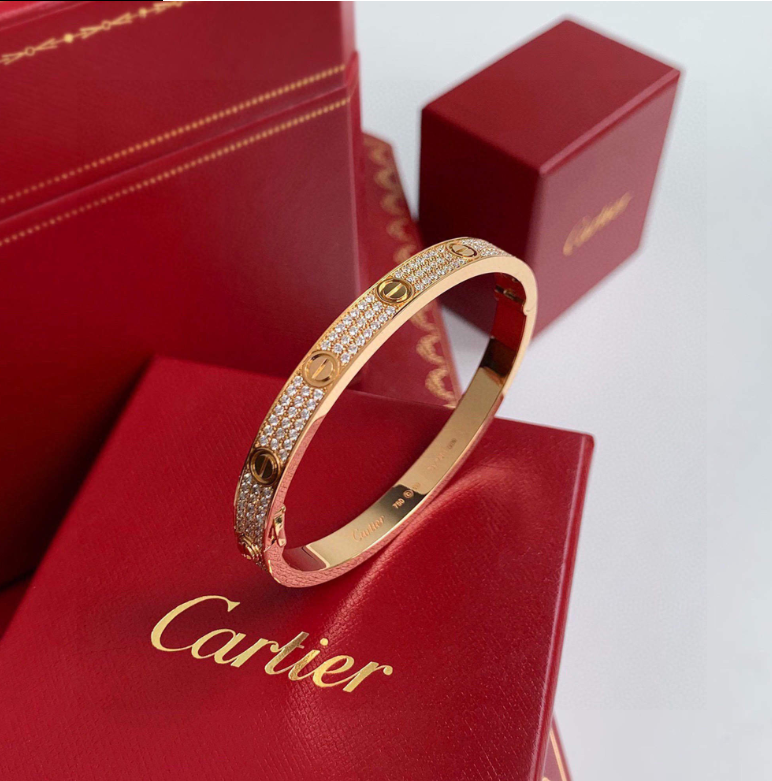
Cartier’s iconic gold Love Bracelet was priced at approximately €7,950 (~$8,470) in late 2024. By 2026, it retails above €9,200 (~$10,000) — a >15% increase in 18 months. This isn’t simply brand inflation: it’s the compounding effect of rising gold prices, Richemont’s strategic retail pricing, and sustained global demand. And in the pre-owned market, the same bracelet in excellent condition is available at a meaningful discount — giving buyers the asset without the retail premium.
A Brief History: Why Civilizations Have Always Trusted Gold
From ancient Egypt and Mesopotamia to the Roman Empire and the Inca civilization, gold has been the universal currency of wealth, power, and permanence. It backed national currencies through the gold standard era and remains the single most widely held reserve asset by central banks today, because, unlike fiat currency, it cannot be printed, defaulted on, or digitally manipulated.
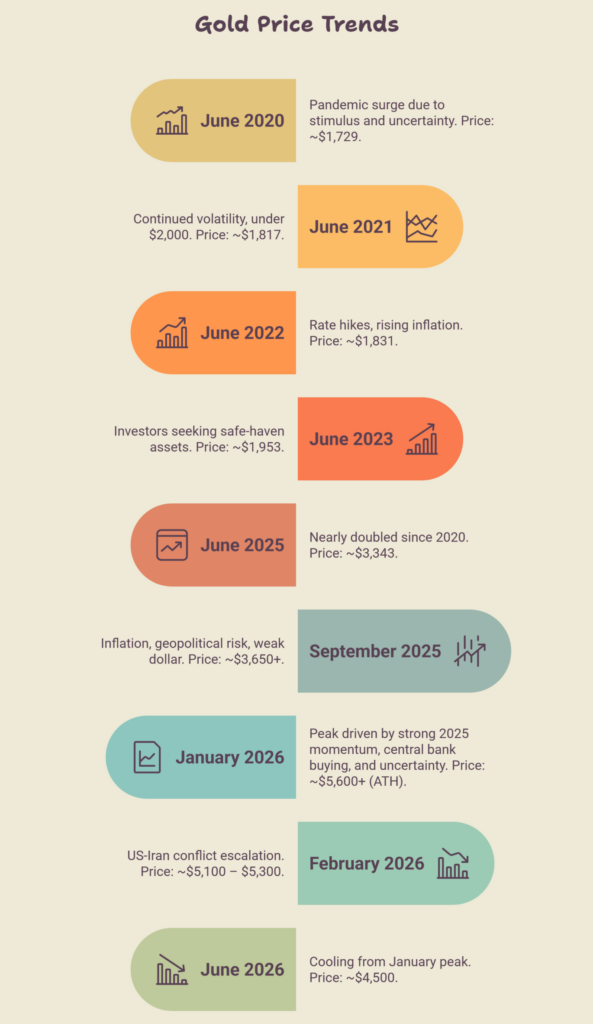
Gold’s scarcity — all gold ever mined could fit into a 22-meter cube — combined with its physical indestructibility, makes it uniquely immune to the debasement that erodes the value of every other currency over time. In 2025 alone, gold set 53 new all-time highs, climbing from $2,624 to above $4,300 by year-end before peaking above $5,600 in January 2026.
Gold in 2026: Still the Ultimate Safe-Haven Asset
Gold’s extraordinary run is not a speculative anomaly — it is a structural shift. According to APMEX, Gold hit an all-time record of $5,602 per ounce on January 28, 2026, driven by a convergence of forces that show no sign of reversing:
- Central bank accumulation: Global central banks purchased 863 tonnes of gold in 2025 — nearly double the 2010–2021 annual average of 473 tonnes, as sovereign institutions diversify away from U.S. dollar reserves.
- De-dollarization: The U.S. dollar fell sharply through 2025, accelerating demand for gold as a neutral reserve asset across China, Turkey, and the Gulf states.
- Geopolitical uncertainty: Ongoing Russia–Ukraine tensions, U.S.–Iran friction, and trade war rhetoric have kept gold’s safe-haven bid firmly in place. In 2025 alone, gold set 53 new all-time highs, climbing from $2,624 to ~$3,650 by September before surging above $4,300 by year-end and peaking above $5,600 in January 2026.
- Record ETF inflows: Global gold investment demand surged 84% in 2025, with investors channeling $17.6 billion into gold over a single four-week period (Bank of America data).
- Analyst forecasts remain bullish: Goldman Sachs targets $5,400/oz by end-2026; J.P. Morgan forecasts $6,000–$6,300; UBS projects $5,000+ by Q4 2026.
For the luxury jewelry investor, the takeaway is simple: gold’s structural drivers are intact, and the brands that build with it — Cartier, Van Cleef, Bulgari, Tiffany — are direct beneficiaries of that momentum.
Gold vs. Other Asset Classes in 2025–2026: How Does It Compare?
Before diving into branded jewelry, it’s worth noting gold’s remarkable performance relative to the broader investment landscape during 2025–mid-2026. Here’s how major asset classes compare — with verified, sourced data:
Asset Class |
2025–Mid 2026 Performance |
Key Pros |
Key Cons |
$10,000 Invested (Jan 2025) → Value by Mid-2026 |
|---|---|---|---|---|
| Gold (Spot) | ~70–74% in 2025 (53 all-time highs; year-end ~$4,300–$4,490) + ATH of $5,600+ in Jan 2026; currently ~$4,500 | Safe-haven asset; inflation hedge; universally liquid; no counterparty risk; central bank-backed demand | No yield or dividends; storage and insurance costs for physical gold; short-term volatility | ~$17,000–$17,400+ |
| Pre-Owned Branded Gold Jewelry (e.g., Cartier, Van Cleef) | 70–74%+ (gold uplift) + brand premium; Van Cleef averaging 112% resale retention; Cartier Love bracelet 85–95% | Full gold price upside + brand equity + collector demand + wearability; pre-owned entry at 15–30% below retail | Requires expert authentication; condition and documentation critical; less liquid than paper gold or ETFs | ~$17,500–$19,000+ (top-tier authenticated pieces) |
| Diamonds (Natural) | -5% to -15% in 2025; continuing a multi-year structural decline; natural 1-carat diamonds now ~$4,200 vs ~$6,000 in 2021; lab-grown down 70–80% since 2020 | Portable; aesthetic value; rare coloured stones may hold value | Illiquid; structural price decline ongoing; severe competition from lab-grown alternatives; 20–50% resale loss typical | ~$8,500–$9,500 (retail resale likely less) |
| Real Estate (US Residential) | ~1–2% in 2025 (FHFA: 1.7% YoY through Oct 2025; median home price: $376,025 → $380,000); modest improvement expected in 2026 | Tangible asset with utility; potential rental income; long-term appreciation; leverage via mortgage | Highly illiquid; 5–6% transaction costs; interest rate sensitivity; maintenance and tax overhead | ~$10,100–$10,200 (before transaction costs, which typically eliminate gains entirely on short holds) |
| Stocks (S&P 500) | ~16–18% in 2025 (price return 16.39%; total return with dividends 17.9%) + ~6–10% est. YTD 2026 | High long-term growth potential; dividend income; highly liquid; broad market exposure | Volatile; geopolitical and economic sensitivity; three consecutive strong years increase correction risk | ~$12,500–$13,000 |
Sources: World Gold Council Gold Demand Trends Full Year 2025; FHFA House Price Index December 2025; Homes.com 2025 Annual Report; S&P Dow Jones Indices Market Attributes December 2025; First Trust Advisors S&P 500 2025 Recap; Rebag 2025 Clair Report; BriteCo Diamond Market Data 2025.
Raw Gold vs. Branded Gold Jewelry: Which Is the Better Investment?
As seen in the table above, Gold outperformed every major conventional asset class by a wide margin in 2025 and maintained strength into 2026, despite cooling from its January peak. Pre-owned branded gold jewelry, particularly iconic pieces from Cartier, Van Cleef & Arpels, and Bulgari, delivered the full gold price upside plus a meaningful brand and design premium, making it the highest-return tangible, wearable asset class for informed buyers during this period. Diamonds, by contrast, continued a structural multi-year decline driven by lab-grown competition, reinforcing why branded gold jewelry, not gemstones, is the wearable investment of choice in 2026.

Most investors instinctively think of gold bullion — bars, coins, or ETFs — as the “pure” gold investment. But branded gold jewelry from the world’s top maisons regularly outperforms raw gold on a total-return basis. Here’s why:
Factor |
Raw Gold (Bars / Coins / ETFs) |
Branded Gold Jewelry (Cartier, Van Cleef, Bvlgari, Tiffany) |
|---|---|---|
| Value Source | 100% spot price — tracks market mechanically | Gold spot price + brand equity + design legacy + collector demand |
| Appreciation Drivers | Inflation, central bank demand, macro risk | All of the above, plus retail price increases by the maison and secondary market desirability |
| Liquidity | Instant liquidity, limited upside above spot | Moderate liquidity; significant upside above spot for iconic pieces |
| Utility | Stored wealth — cannot be worn, gifted, or enjoyed | Wearable wealth — usable, giftable, collectible, and inheritable |
| Emotional & Status Value | None | High — a symbol of taste, success, and cultural literacy |
| Sustainability | Neutral | In the pre-owned market: supports circular luxury, zero new mining impact |
| Entry Price (Pre-Owned) | Spot price only | 15–30% below retail — immediate built-in discount to market value |
The arithmetic is compelling. A Cartier Love Bracelet in 18K yellow gold contains roughly 30–35 grams of gold. At $4,500/oz, that’s approximately $4,300–$5,000 in raw gold content. Yet the same bracelet sells pre-owned for $7,500–$9,500 — a premium of 50–100% above scrap value. That premium is not speculation; it is the market’s consistent, decades-long valuation of Cartier’s brand equity, design recognition, and cultural permanence.
In short, bullion preserves your wealth. Designer pre-owned gold jewelry enhances it.
Pre-Owned vs. New Luxury Gold Jewelry: Why Pre-Owned Wins Every Time
So branded gold jewelry beats bullion. But should you buy new from the boutique, or pre-owned? For any investor thinking clearly about entry price, resale trajectory, and total return, pre-owned is the sharper choice, consistently and by a wide margin. Here’s the full comparison:
Factor |
New Branded Jewelry (Retail Boutique) |
Pre-Owned Branded Jewelry (The Luxury Closet) |
|---|---|---|
| Purchase Price | Includes 30–50% retail markup for boutique overhead, branding, and exclusivity | Priced 15–30% below retail, the first owner has already absorbed the initial depreciation |
| Value Retention | Depreciates 20–30% the moment you walk out of the boutique; recovery depends entirely on the brand and the piece | Enters the secondary market at or near fair market value — the fastest path to appreciation begins immediately |
| Investment Potential | Lower short-term ROI due to the retail margin paid upfront — you’re starting from behind | Higher ROI potential: you buy below retail yet benefit from the same gold price upside and brand premium |
| Rarity & Collectibility | Current-season pieces are widely available; limited editions are subject to waitlists and allocation | Access to discontinued, vintage, and rare collections with genuine collector scarcity — pieces no boutique can offer |
| Sustainability | Requires new gold sourcing and manufacturing; significant environmental and carbon footprint | Supports circular luxury — zero incremental mining impact; the most eco-conscious way to own fine jewelry |
| Authenticity Confidence | Full boutique provenance — unimpeachable, but commands full retail premium | Expert-authenticated by The Luxury Closet with certification, detailed inspection reports, and original packaging where available — the same confidence at a fraction of the cost |
| Emotional & Aesthetic Value | The new luxury experience — but lacks individual history or character | Carries craftsmanship legacy, provenance, and often a unique vintage character that new pieces cannot replicate |
| Liquidity & Resale Reach | Limited buy-back options; brand boutiques rarely repurchase; resale requires finding your own buyer | Deep global resale demand; easier to liquidate at competitive prices through TLC and the broader pre-owned luxury ecosystem |
| Status & Perception | New luxury — immediate gratification, but short-term thinking | Smarter, sustainable prestige — a symbol of discernment; the choice of the informed luxury buyer |
What the table points at:
- When you buy a new Cartier Love Bracelet at retail today, you immediately absorb a 20–30% depreciation the moment the boutique transaction closes.
- When you buy the same bracelet pre-owned, authenticated, in excellent condition, with box and papers, you start at fair market value.
- Both pieces will benefit equally from rising gold prices.
- Both carry identical brand equity. But only the pre-owned buyer entered the position without paying a premium that they will never recover.

You get the same piece. The same gold. The same Cartier name on the box. At 15–30% less than the person who bought it new, and with better liquidity when you decide to sell.
Pre-owned branded gold jewelry, such as pre-owned Bvlgari, offers a lower entry point, equal gold price upside, and the same brand equity as buying retail, with the added advantage that the initial depreciation has already been absorbed by someone else.

You invest simultaneously in gold, brand equity, sustainability, and long-term appreciation. That is not a compromise. It is the smarter trade.
Brand-by-Brand Resale Value Guide: Cartier vs. Van Cleef vs. Bulgari vs. Tiffany
Now that the case for pre-owned branded gold jewelry is clear, the key question is: which brand? Not all luxury gold jewelry performs equally on the resale market. According to Rebag’s 2025 Clair Report — the most comprehensive annual luxury resale index, covering millions of data points — fine jewelry solidified its position as a dependable investment category, with Van Cleef & Arpels and Cartier leading all performers. Here’s the definitive breakdown:
| Brand | Avg. Resale Retention | Top Performing Piece | Best Gold Type to Buy | Market Liquidity | Investment Verdict |
|---|---|---|---|---|---|
| Van Cleef & Arpels | 112% (above retail) — led by Sweet Alhambra | Sweet Alhambra Bracelet: 117% retention; Vintage Alhambra: 80–90% | 18K Yellow Gold | Very High (~90% of pieces sell within 30 days) | 🥇 Top Performer — the only fine jewelry brand consistently reselling above retail price |
| Cartier | 85–95% (Love bracelet); brand average ~79% | Love Bracelet YG: 85–95%; Juste un Clou: 80–90%; Trinity Ring: 70–85% | 18K Yellow Gold | Very High — deepest global buyer pool | 🥈 Most Liquid — the blue-chip choice; sells fastest with the least price negotiation |
| Bulgari | 65–80% | Serpenti: strongest retention; B.zero1 4-band: durable performer; Tubogas: strong in right configuration | 18K Yellow or Two-Tone Gold | Medium–High | 🥉 Strong but Selective — iconic Bulgari designs hold best; fashion-adjacent pieces depreciate faster |
| Tiffany & Co. | 55–75% (gold & platinum pieces only); sterling silver is significantly lower | Vintage gold & platinum pieces; T Wire in 18K gold; Return to Tiffany (gold) | 18K Yellow Gold & Platinum | Medium | ⚠️ Entry-Level Investment — gold and platinum outperform; silver collections are not investment-grade |
Sources: Rebag 2025 Clair Report; myGemma investment jewelry analysis; Watch My Diamonds resale data; Luxury Columnist 2026 jewelry investment study.
Van Cleef & Arpels—The Jewelry Investment That Beats Retail
Van Cleef & Arpels achieved 112% overall resale retention in Rebag’s 2025 Clair Report — meaning pieces sell for more than their original retail price on average. The Sweet Alhambra bracelet leads the maison at 117% retention, while the broader Alhambra family (Vintage, Magic, Between the Finger rings) consistently holds 80–90% of retail.
What makes Alhambra so resilient is not just popularity, but repeatability: the four-leaf clover motif is modular, the look is instantly recognizable across cultures, and collectors build sets over years — creating a self-reinforcing buyer pool that keeps prices supported even in softer markets. Malachite Vintage Alhambra bracelets appreciated approximately 20% between 2023 and 2025; guilloché pieces rose 17.3%. Mystery-Set creations have increased by over 300% at auction over the past decade.
The Van Cleef investment case is simple: boutique waitlists + limited supply + global collector demand = secondary market premiums above retail. Very few fine jewelry brands achieve this, and none do it as consistently as Van Cleef.
Cartier—The Most Liquid Gold Jewelry Investment in the World

Cartier’s bracelets average a 96% resale retention rate — the highest of any bracelet category in the luxury resale market. The yellow gold Love Bracelet (classic, no diamonds) has an 85–95% retention rate, and during gold price surges, it has exceeded its retail price on the secondary market. The Juste un Clou holds 80–90%, and the Trinity Ring 70–85% across gold types.
Cartier’s investment advantage is liquidity: the Love Bracelet in yellow gold (sizes 17–19) is the closest thing the jewelry world has to a blue-chip resale asset. It sells quickly, commands minimal price negotiation, and has a buyer pool that is truly global — from London to Dubai to Shanghai.
Crucially, Cartier’s parent company, Richemont, raises retail prices strategically rather than aggressively to avoid pricing markets out. This discipline means the gap between retail and pre-owned prices stays consistent — and buyers who enter via pre-owned immediately capture that built-in discount without sacrificing any upside.
Bulgari—Bold, Iconic, and Selectively Investment-Grade

Bulgari is naturally closer to fashion than Cartier or Van Cleef — its expressive Roman identity means pieces that “feel like a moment” can cool faster than pieces that “feel like a signature.” The investment rule for Bulgari is clear: buy unmistakably Bulgari pieces in unmistakably Bulgari materials.
The Serpenti collection is Bulgari’s strongest resale performer, followed by B.zero1 (particularly the 4-band version) and Tubogas pieces in desirable configurations. These hold 65–80% of retail—creditable, though below Van Cleef and Cartier. Vintage Bulgari from the 1970s and early 1980s, particularly pieces with bold coloured stones and Roman coin motifs, is a collector category unto itself and frequently exceeds retail at auction.
When Bulgari pieces feature high gold content (18K two-tone or yellow gold) and come with full provenance, they benefit strongly from rising gold prices — the material value uplift is significant relative to the purchase price, making high-gold-content Bulgari one of the better plays in the current environment.
Tiffany & Co—Strong in Gold, Weaker in Silver
Tiffany is the most accessible luxury jewelry brand by entry price — but accessibility cuts both ways on the resale market. Sterling silver Tiffany pieces are not investment-grade: they are easily obtainable at retail, widely available in the secondary market, and do not command meaningful premiums.
However, 18K gold and platinum Tiffany pieces tell a very different story. Vintage gold Tiffany, platinum engagement settings, and the T Wire collection in yellow gold retain 55–75% of retail, respectable, though below the top three brands. The strongest Tiffany investment plays are vintage gold pieces with original boxes and documentation, and platinum high-jewelry items where rarity and material value combine.
For buyers new to pre-owned luxury jewelry investment, Tiffany gold makes an excellent entry point — lower absolute price, strong global brand recognition, and reliable liquidity at the right price.
How Rising Gold Prices Amplify the Value of Pre-Owned Branded Jewelry
With gold prices having risen over 70% year-on-year by early 2026, the material value component of all 18K gold jewelry has risen in lock-step. But the effect on pre-owned branded jewelry is not uniform — here is exactly how the dynamics play out:
- Material cost amplification: Cartier and Bulgari pieces feature high-karat gold (18K, occasionally 22K). As spot prices rise, the raw gold content in a piece rises proportionally — adding to the floor value that buyers use to anchor their willingness to pay in the secondary market.
- Resale premium expansion: Since buyers of pre-owned Cartier watches already value craftsmanship and brand equity over scrap value, rising material costs further extend that premium. Gold-heavy pieces — the Love Bracelet bangle, Juste un Clou, Serpenti bangle — see the greatest benefit.
- Demand surge in the pre-owned market: When gold spot prices spike, buyers who want gold exposure without paying full retail for a new piece flood the pre-owned market. This surge in demand actively supports — and in some cases elevates — pre-owned pricing above where it would otherwise be.
- Retail restraint creates pre-owned opportunity: Richemont has publicly cautioned against raising Cartier retail prices too aggressively to avoid pricing certain markets out. This restraint creates windows in which pre-owned pieces are priced below what rising gold prices would fully justify — a genuine, time-limited opportunity for informed buyers.
- Time lag and the buyer’s edge: Pre-owned price adjustments typically lag spot price moves by days or weeks. Buyers who act promptly after a gold price surge often secure pieces before sellers have repriced, a timing advantage unique to the secondary market and unavailable at the boutique.
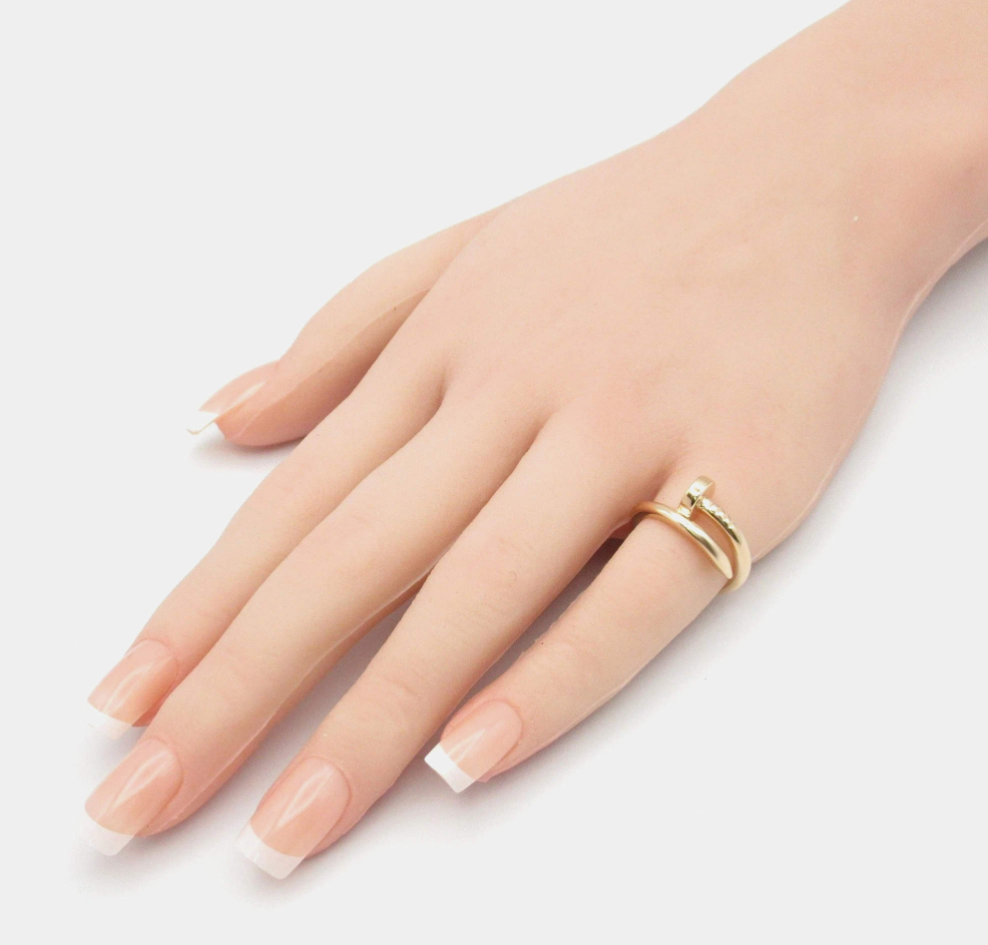
When Gold Meets Craftsmanship: The Pre-Owned Advantage at The Luxury Closet
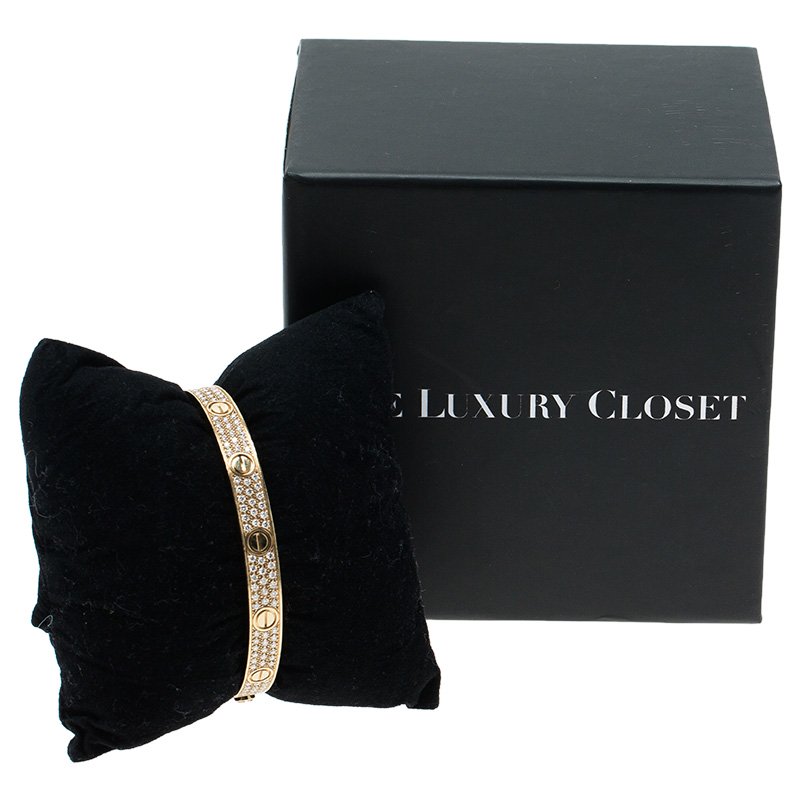
Rising gold prices have supercharged the value of pre-owned gold jewelry. With spot prices at multi-year highs and leading analysts forecasting $5,000–$6,000/oz by end-2026, the maisons that build with gold — Cartier, Van Cleef & Arpels, Bulgari — are reaping the full benefit. Their pieces marry gold’s intrinsic material worth with iconic design that commands premiums well above spot price, generation after generation.
For instance, a pre-owned Cartier Love Bracelet in 18K gold not only holds its market value — it also appreciates alongside the metal’s rally, while the buyer enjoys wearing it. That combination of financial return, wearability, and status is something no gold bar, ETF, or stock can replicate.
At The Luxury Closet, every piece is authenticated, curated, and delivered with certificates and original packaging where available — from delicate Cartier gold rings and Love bracelets to Van Cleef Alhambra necklaces and Bulgari Serpenti bangles. Each piece is verified by in-house experts, backed by inspection reports, and priced to reflect real market value — not boutique overheads.
For buyers across the UAE and the Gulf, TLC offers something no boutique can: a global, authenticated inventory of pre-owned luxury jewelry, available immediately, at prices the boutique cannot match. The collection spans everything from gold cross necklaces and statement bangles to gold rings for women, each iconic and designer.
Gold that you can wear. Brands that endure. Value that compounds. A legacy that passes on. That is what pre-owned luxury gold jewelry at The Luxury Closet delivers — and why it remains, in 2026, the single most compelling wearable investment available.
Frequently Asked Questions
Which luxury jewelry brand has the best resale value in 2026?
Van Cleef & Arpels leads all fine jewelry brands in average resale retention at 112% — meaning pieces sell for more than their original retail price, according to Rebag’s 2025 Clair Report. The Sweet Alhambra bracelet alone retains 117% of its retail value. Cartier comes second, with its Love Bracelet in 18K yellow gold, averaging 85–95% retention and the highest liquidity of any jewelry piece in the secondary market.
Is pre-owned gold jewelry a better investment than gold bullion?
For most buyers, yes. Pre-owned branded gold jewelry from Maisons like Cartier and Van Cleef & Arpels captures gold’s full spot-price upside and adds brand equity, a design premium, and collector demand on top. A pre-owned Cartier Love Bracelet in 18K gold typically sells for 50–100% above its raw gold scrap value — a premium that bullion simply cannot generate. Pre-owned pieces are also bought at 15–30% below retail, providing an immediate built-in cost advantage before any price movement occurs.
Why is buying pre-owned luxury jewelry smarter than buying new?
When you buy new from a boutique, you immediately absorb a 20–30% depreciation the moment the transaction closes — you are paying for the boutique’s overhead, branding, and exclusivity markup. Pre-owned buyers enter at fair market value, having let the first owner absorb that hit. Both pieces carry the same brand equity, the same gold, and the same upside from rising gold prices — but the pre-owned buyer started 15–30% ahead. Pre-owned also offers access to discontinued and vintage pieces unavailable at retail, stronger resale liquidity, and the sustainability credentials of circular luxury.
What is the current retail price of a Cartier Love Bracelet in 2026?
Following Cartier’s global price adjustments in 2025, the classic Love Bracelet (18K yellow gold, no diamonds, ref. B6067517) is priced approximately as follows in 2026:
| Region | Retail Price (2026 est.) | USD Equivalent | Note |
|---|---|---|---|
| Europe (EUR) | ~€9,200 | ~$10,000 | Includes 20% VAT |
| United States (USD) | ~$7,850–$8,200 | $7,850–$8,200 | Excludes state sales tax |
| UAE (AED) | ~AED 32,000–34,000 | ~$8,700–$9,250 | Includes 5% VAT; tourist refund may apply |
Pre-owned Love Bracelets in excellent condition at The Luxury Closet are typically priced 15–25% below these figures, depending on condition, size, and whether the original box and papers are included.
Does Van Cleef Alhambra jewelry hold its value?
Exceptionally well — the Alhambra is one of the most resilient resale assets in all of luxury goods, not just jewelry. The Sweet Alhambra bracelet retains an average of 117% of its retail value; the Vintage Alhambra 80–90%. Malachite editions appreciated approximately 20% between 2023 and 2025. Vintage Alhambra pieces from the 1970s and 1980s frequently sell at auction for 2–3 times their original prices. Approximately 90% of Alhambra pieces listed on major resale platforms sell within 30 days.
Is Bulgari jewelry a good investment?
Selectively, yes. Bulgari’s strongest investment pieces are those that are unmistakably Bulgari in design — the Serpenti collection, B.zero1 (particularly 4-band configurations in yellow or two-tone 18K gold), and Tubogas. These typically retain 65–80% of retail value. Vintage Bulgari high jewelry from the 1970s–1980s is a distinct collector category that has seen strong appreciation at auction, with rare pieces often exceeding their original retail prices. Fashion-adjacent or less iconic Bulgari pieces depreciate faster and are not recommended as investment-grade purchases.
Where can I buy authenticated pre-owned luxury gold jewelry in Dubai?
Dubai is one of the world’s most active luxury jewelry markets — but authentication is everything. A Cartier Love Bracelet or Van Cleef Alhambra purchased without proper verification carries real financial risk, regardless of where it’s bought.
The Luxury Closet offers Dubai-based buyers fully authenticated, globally sourced Cartier, Van Cleef & Arpels, Bulgari, and Tiffany gold jewelry, every piece expert-verified, accompanied by inspection reports, and priced below boutique retail. With a UAE-based team and same-city delivery, TLC combines local convenience with global inventory depth. For buyers weighing the traditional Dubai Gold Souk against the pre-owned luxury market, TLC adds what the souk cannot: brand provenance, documentation, and a guaranteed price advantage over boutique retail.
Is buying pre-owned gold jewelry in the UAE a good investment in 2026?
Three structural advantages make the UAE one of the best markets globally to buy pre-owned branded gold jewelry as an investment:
- Low VAT: At just 5%, the UAE’s jewelry VAT is a fraction of Europe’s 20%, meaning buyers retain significantly more value from day one.
- Competitive gold pricing: Dubai’s status as a top global gold re-export hub keeps pre-owned gold jewelry prices consistently sharper than those of equivalent pieces in European or US resale markets.
- Strong local resale demand: Dubai’s international, high-net-worth population creates deep, sustained demand for iconic pieces, Cartier, Van Cleef, and Bvlgari, making them among the most liquid luxury assets in the regional secondary market.
For UAE-based investors, The Luxury Closet combines gold’s structural upside, brand premium, and the UAE’s inherent market advantages into a single authenticated, wearable investment.
Is a gold cross necklace a good investment?
An 18K gold cross necklace from a recognized maison retains its material value as gold prices rise and offers the additional emotional and gifting value that bullion cannot offer. For investment-grade returns, pair that purchase with a piece from an iconic collection, Love, Alhambra, or Serpenti, where brand premium compounds alongside gold’s spot price.
Where can I buy authenticated pre-owned Cartier and Van Cleef jewelry in the UAE?
The Luxury Closet is one of the region’s leading authenticated pre-owned luxury platforms, with a curated selection of Cartier Love bracelets, Van Cleef & Arpels Alhambra pieces, Bulgari Serpenti jewelry, and Tiffany gold collections. Every piece is authenticated by in-house experts, accompanied by detailed inspection reports and original packaging where available, and backed by full buyer protections.
Where can I sell my designer gold jewelry online?
If you’ve invested in pre-owned branded gold jewelry and are ready to realize its value, choosing the right platform to sell luxury jewelry online is just as important as where you bought it. Not all resale platforms have genuine authentication standards, buyer reach, pricing transparency, and speed of sale varies enormously.
The Luxury Closet’s jewelry selling service offers a straightforward, fully managed process: submit your piece for evaluation, receive a competitive valuation from in-house experts, and list to a global audience of authenticated buyers actively seeking Cartier, Van Cleef & Arpels, Bulgari, and Tiffany pieces. TLC’s established buyer base, spanning the UAE, Europe, and Asia, means iconic gold jewelry pieces typically sell faster and at stronger prices than on generalist platforms.
For investment-grade pieces in excellent condition with original box and papers, a specialist luxury resale platform consistently outperforms general marketplaces on both final sale price and time to sale.